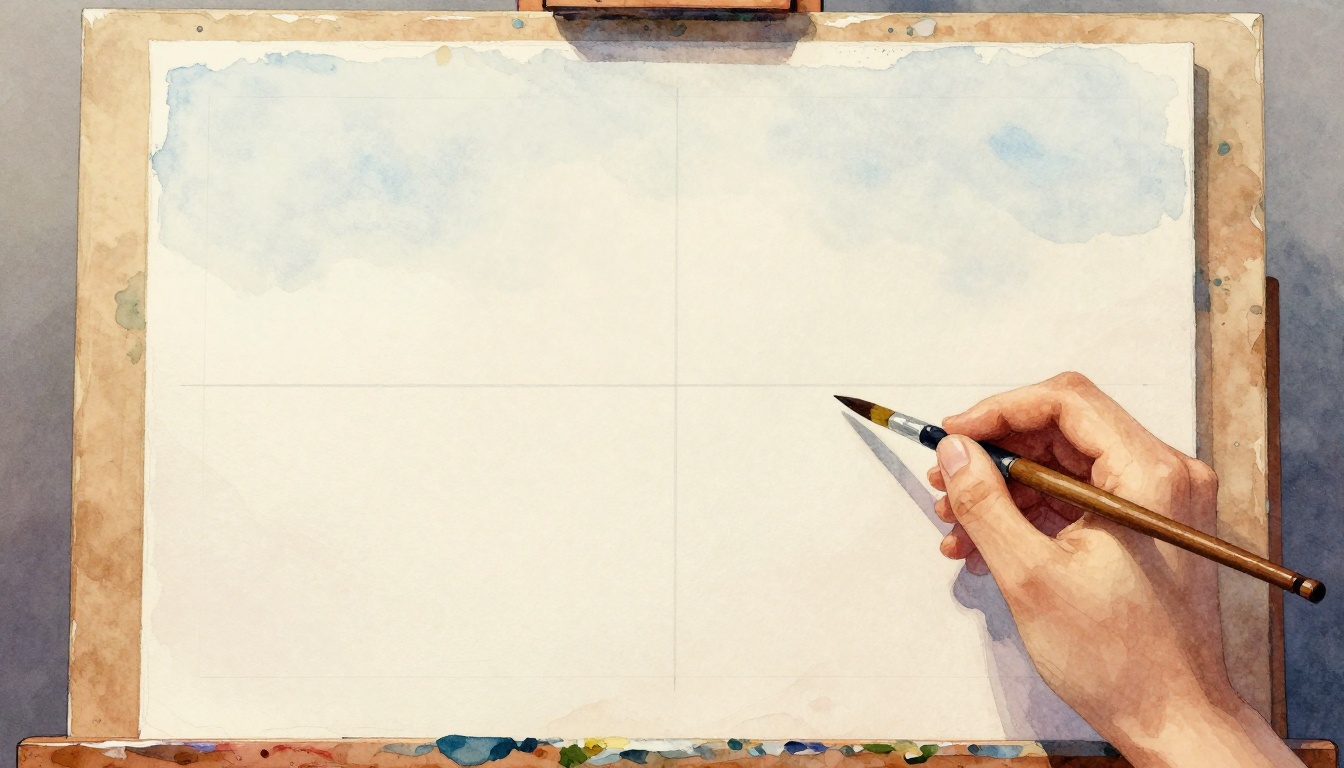
Even beginner painters can create pro-level artwork that looks balanced and alive. You don’t need fancy tools or years of training. The rule of thirds acts like a simple grid trick pros swear by to place objects just right.
This method makes paintings feel calm yet eye-catching. It started in photography, but painters quickly saw its magic for compositions. You’ll guide viewers’ eyes with ease.
Ready to transform your work? Let’s start with the basics of this powerful rule.
What Is the Rule of Thirds and Why It Creates Balance
Picture your canvas divided into nine equal boxes. Draw two horizontal lines and two vertical lines to make the grid. The magic happens at the four spots where these lines cross. Those are your power points.
Place key elements there instead of dead center. Your painting gains natural flow. Viewers’ eyes move smoothly, not stuck in one spot.
Think of a photo of a friend. Center their face, and it feels stiff. Shift them to one side, and the image pops with energy. Paintings work the same way. This rule taps into how we scan the world, creating harmony without effort.
The Invisible Grid That Guides Your Eye
Draw the grid in your mind or with faint pencil lines before you paint. Mark lines at one-third and two-thirds across the canvas. Both ways, height and width.
This setup fights boredom from centered subjects. Your artwork breathes. It suits landscapes with sweeping skies, portraits full of emotion, or abstracts that swirl.
For example, position a mountain peak at a crossing point. The viewer’s gaze follows lines naturally. Balance emerges fast.
Why Balance Matters More Than Perfect Symmetry
Symmetry looks neat but often flat. Everything mirrors perfectly, like a logo. It lacks life.
The rule of thirds brings asymmetry. It feels dynamic, like real scenes. Our brains crave this slight offset for interest. Too much symmetry bores; pure chaos overwhelms.
Science backs it. Studies show eyes prefer compositions with gentle tension. Balance here means visual weight spreads evenly. Your paintings hook viewers longer.
Step-by-Step Guide to Applying the Rule in Your Painting
Grab your canvas and start small. Practice on scrap paper first. This builds confidence without waste.
Follow these steps. You’ll see balance improve right away. Action makes it stick.
Sketch Your Grid and Pick Power Points
Lightly sketch the two horizontal and two vertical lines. Divide your canvas into thirds.
Choose your main subject, like a tree or face. Place it at one intersection. Never center it.
Flip the canvas upside down. Check if it still works. This fresh view spots issues quick.
Position Secondary Elements for Flow
Add supporting items along the grid lines. Skip the intersections for these. Let them lead the eye.
For instance, curve a path along a line. Stack clouds at one-third height from the top. Balance sides with equal visual weight, like a bush on the light side.
This creates movement. Viewers wander the whole piece, not just one spot.
Layer Colors and Details Without Overloading
Build from the background forward. Keep bold energy at power points.
Step back every few minutes. Ensure no side feels heavy. Use your thumb and a pencil as a viewfinder. Frame parts to test balance.
Details stay light elsewhere. This keeps focus sharp. Your painting feels unified.
Real Painting Examples That Nail the Rule of Thirds
See the rule in action. Dull centered setups turn vibrant with shifts.
Classics prove it. Monet placed water lilies’ horizon at the lower third. Space above draws you in. Van Gogh swirled stars at intersections in his night sky. Energy pulls everywhere.
Modern artists use it too. Street murals balance crowds with open thirds. Digital painters align pixels the same. Imagine your still life upgraded this way.
Landscapes That Breathe with Open Space
Drop the horizon low, at the bottom third. Big sky dominates.
Place foreground rocks at the left intersection. Empty right space feels peaceful, not empty.
Balance comes from contrast. Sky pulls up; ground anchors down. Viewers relax into the scene.
Portraits with Eyes That Draw You In
Set eyes at upper intersections. Face sits off-center.
Shoulders follow a grid line. This adds intimacy, like a real glance.
The blank space beside invites emotion. Your portraits connect deeper.
Pitfalls to Dodge for Flawless Results
Mistakes happen. Spot them early for better work.
Common ones unbalance fast. Fix with practice. Experiment builds instinct over time.
Centering Everything by Habit
Old habits center subjects. It creates a bullseye bore.
Force the grid for your first 10 paintings. Shift items deliberately. Energy returns.
Forgetting to Balance Both Sides
One side loads up. The pull feels lopsided.
Weigh visual mass, like dark blobs versus light. Move elements along lines. Even it out.
Other traps include overcrowding one spot or ignoring the grid mid-paint. Pause and check. Step back often.
Master these, and balance becomes second nature.
The rule of thirds delivers pro balance with a simple grid. You now know the why, steps, examples, and fixes.
Grab paints today. Try one painting using these power points. Share your before-and-after in the comments.
Even Picasso twisted rules after basics. Yours will shine quick with practice. Paint on.