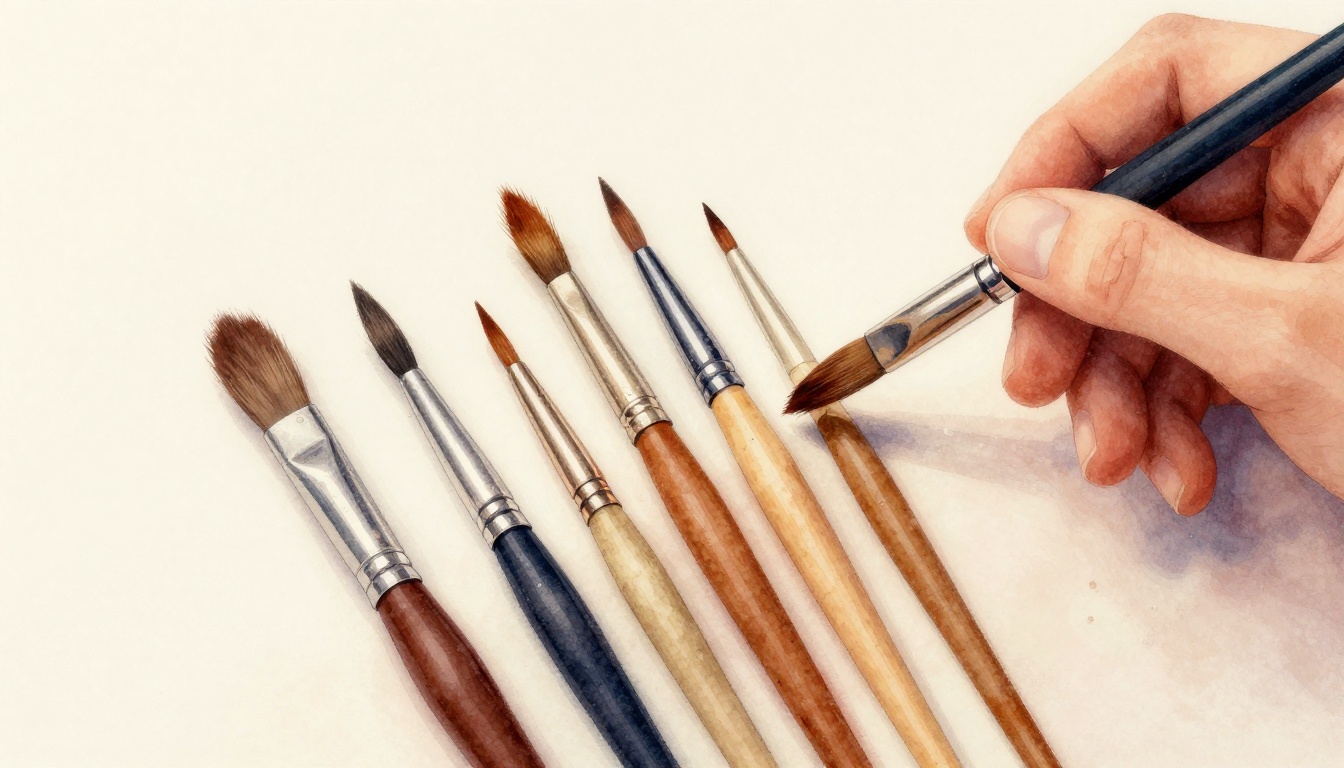
Picture this. You grab your canvas, mix your colors, and start painting a fluffy cat’s fur. But your strokes blob together. The texture looks flat. Frustration hits because the wrong brush shape fights your every move.
Brush shape controls paint flow. It sets precision and finish. A good match turns messy lines into sharp details. You’ll handle dots, edges, and blends with ease. Common shapes include round, liner, angular, filbert, and fan. Each excels at certain tasks.
This guide breaks it down. First, explore key shapes and their strengths. Next, match them to projects like landscapes or portraits. Then, pick up tips for buying and care. Finally, dodge common mistakes. You’ll select paintbrush shapes for specific details and boost your results fast.
Key Paintbrush Shapes Built for Bringing Out Details
Different shapes suit different jobs. Round brushes mimic a pen tip for tiny strokes. Liners draw long lines like a ruler. Each one holds paint just right. Pros include control and snap back. Cons might mean less coverage in big areas. Let’s look closer.
Round Brushes: Precision Control for Tiny Strokes
Round brushes taper to a fine point. They hold paint well for dots or petals. Sizes run from 00 to 2. Smaller ones tackle whiskers. Larger handle leaf veins.
Springy bristles give control. You press light for highlights. Synthetics work best with acrylics. Naturals suit oils because they absorb less water. For example, paint animal eyes with a size 0. It flows smooth without spreading.
In addition, these brushes snap back after bending. That means clean lines every time. However, they need good paint mix. Too thick, and tips splay.
Liner Brushes: Long, Clean Lines Every Time
Liner brushes, or riggers, have extra-long thin bristles. They create signatures or grass blades. Fur strands come out crisp. The length prevents blobs on fine work.
Best with watery paints like inks. Thinned oils flow well too. Picture gliding along a branch outline. No wobbles because bristles stay taut.
On the other hand, avoid heavy loads. They excel at one stroke per line. Sizes vary from extra fine to medium. Pick based on line width needed.
Angular Brushes: Crisp Edges and Bold Accents
Angular brushes feature a flat side that chiseled to a point. They paint straight edges or corners. Grass tufts gain texture fast. The flat stamps bold lines. The point adds details.
Pair them with thicker paints. Acrylics stick without dripping. Geometric patterns shine here. Bark needs those sharp cracks.
For instance, tape off areas first. Then chisel in. Results look pro. Still, practice on scrap. Angles take getting used to.
Filbert Brushes: Seamless Blends and Soft Edges
Filberts oval out flat to rounded. They cover areas soft. Curved petals blend without harsh lines. Feathers or skin tones work great.
Flat side fills quick. Tip feathers edges. Most paints handle fine. Portraits love the versatility.
Besides, they save time on curves. No back-and-forth strokes. However, clean often. Buildup muddies blends.
Fan Brushes: Texture Magic for Subtle Details
Fan brushes spread wide like fingers. Dry brush fur or foliage. Clouds gain fluff. Distant trees texture up easy.
Warns against wet overload. Paint drips mess it. Stipple light for animal coats.
Quick tip: twist for grass. Or fan for waves. Synthetics hold shape better.
Match Brush Shapes to Your Painting Project Perfectly
Now pair shapes to art types. Test on scrap paper first. See how paint flows. Landscapes need varied textures. Portraits demand subtle skin. Still lifes focus sharp objects.
This match boosts efficiency. You’ll finish faster with better details.
Landscapes: Capturing Nature’s Fine Textures
Rounds detail distant trees. Fans add misty foliage. Angulars chisel rocks crisp.
Liners draw paths or waves. For example, watery horizons use thin lines. Filberts blend hills soft.
Mix them. Start broad, add fine touches. Results pop with depth.
Portraits: Defining Faces with Subtle Strokes
Filberts smooth cheeks. Rounds do lashes or freckles. Liners outline lips fine.
Blend skin without mud. Layer thin. Highlights on nose need rounds.
In addition, angulars edge hair sharp. Practice eyes first. They set the face.
Still Lifes: Sharp Focus on Objects and Patterns
Angulars trace glass edges. Rounds highlight fruit shine. Filberts fold fabric real.
Fans texture tablecloths light. Keep contrasts strong. Details draw eyes in.
Smart Tips to Pick and Care for Detail Brushes
Shape matters most. But size, material, and handle fit your style too. Synthetics suit acrylics. They rinse clean. Naturals absorb oils better.
Budget options work fine. Pros last longer with care. Buy at art stores or online.
Size, Material, and Handle Choices That Fit Your Style
Match size to detail scale. Tiny jobs need 00 rounds. Bigger accents take size 4.
Short handles boost control. Long ones suit easel work. Test grip first.
Synthetics snap back fast. Naturals give softer flow.
Quick Tests and Maintenance for Lasting Performance
Swish in-store on paper. Check snap and flow. At home, load light.
Wash with soap right after. Reshape while damp. Dry flat.
Avoid heat or soaking long. That ruins tips. Clean keeps shapes sharp.
Steer Clear of These Brush Blunders That Blur Your Details
Fat flats fail on lines. Thick paint clogs soft ones. Poor cleaning dulls points.
Fix with right picks. Wipe excess always. Match viscosity.
Overloading the Brush Leads to Messy Edges
Too much paint hides shape perks. Blobs ruin precision. Wipe on rag first.
Load half full. Stroke light. Clean edges stay true.
Wrong Shape for Paint Viscosity Ruins Flow
Thick paint needs stiff angulars. Thin loves soft rounds. Swap when it drags.
Test mixes. Adjust or thin out. Flow improves details.
Right choices make details shine. Grab a new shape this week. Try it on scrap. Share your project in comments below. Subscribe for more tips.
Your strokes will pop. Fine fur, crisp lines, soft blends all come easy. Paint with confidence now. What detail trips you up most?