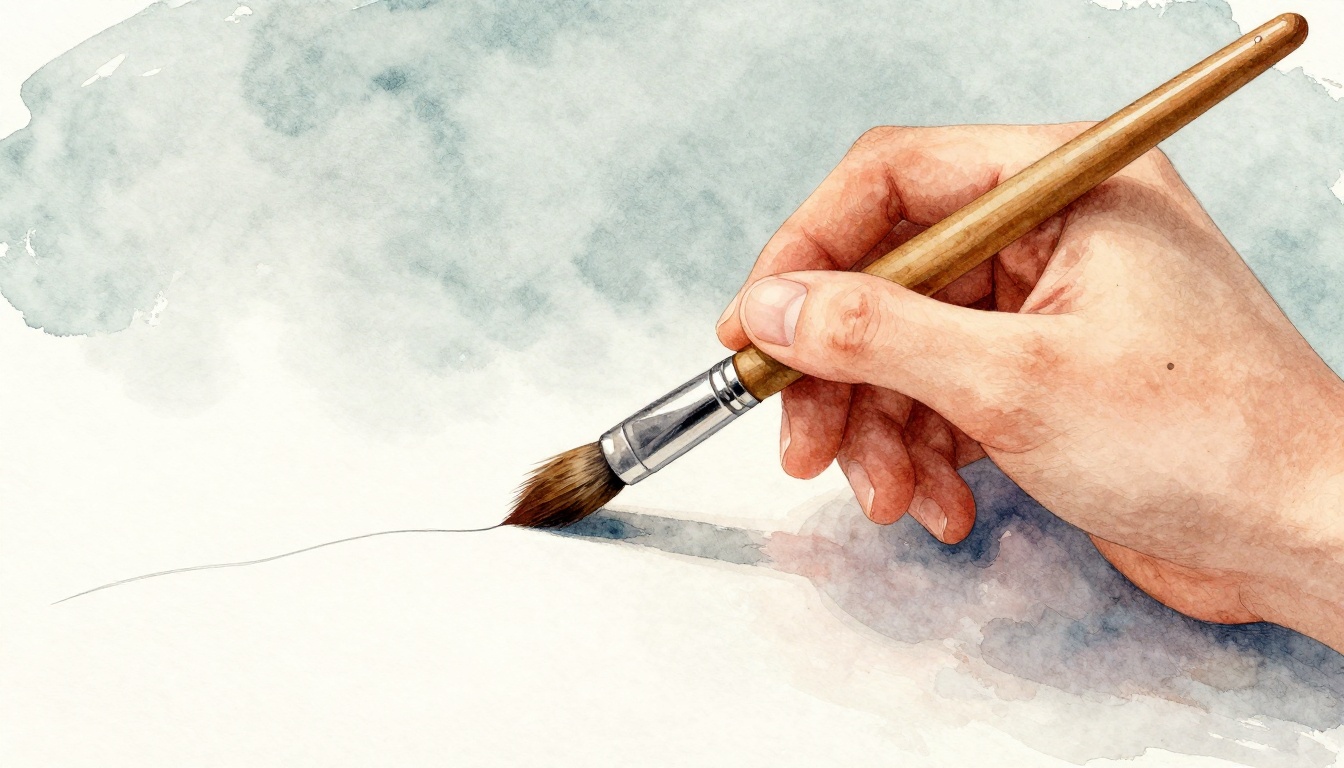
You grab your paintbrush, dip it in color, and start a line. Then it wobbles. The stroke turns uneven, and frustration hits. This happens to most painters at some point.
A simple tweak in how you hold the brush fixes that. Proper grip gives you stroke precision and control. You get smoother lines, less fatigue, and sharper details. No more shaky hands ruining your work.
In this post, you will learn why grip matters so much. You will master three key holds for different styles. Plus, you will pick up tips on pressure, angle, and motion. You will spot common mistakes and dodge them. Finally, short drills build your skills fast. Grab a brush and scrap paper. Follow along to see quick changes.
Why Your Paintbrush Grip Sets the Stage for Precision
Your grip decides how steady your strokes stay. It balances the brush for control. Fingers work together, so paint flows even.
Think of brush parts first. The ferrule clamps the bristles. The handle gives you hold points. Grip near the ferrule for fine work. Grip back for power. This changes line thickness and sharpness.
For example, hold it like a pencil for thin lines. Hold it like a hammer for broad strokes. Beginners gain confidence fast. Pros blend colors smoother and add details easier.
A good grip cuts hand strain too. You paint longer without shakes. In short, it sets up every mark you make.
The Link Between Grip and Hand Fatigue
Poor grip tenses your muscles. After 30 minutes, strokes shake. Fingers cramp because you squeeze too hard.
Relaxed grips change that. You support the brush lightly. Hands stay steady for hours. Start with 10-minute sessions. Feel the ease right away. As a result, your art improves faster.
Master These Three Grips for Any Painting Style
Pick the right grip for your task. Three main ones cover most needs. They shift with your project.
Pencil grip suits details. Fulcrum grip handles varied lines. Overhand grip tackles big areas. Practice each on scrap paper. Switch mid-painting as needed. You will feel control grow.
Experiment often. Your hand learns what works. Then, strokes match your vision.
Pencil Grip: Ideal for Fine Lines and Intricate Details
Hold the brush like a pencil. Place thumb and index finger on opposite sides of the handle. Rest your middle finger underneath for support.
Keep the pinky relaxed on the table. This adds stability. Use it for portraits or tiny leaves. Lines stay sharp and even.
Start near the ferrule. Thumb presses lightly. Index guides the tip. Middle finger balances weight. Paint slow strokes first. Then speed up. You control every curve.
Benefits shine in details. Feathers look real. Eyes pop with precision. In addition, it feels natural if you draw often.
Fulcrum Grip: Balance Control and Brush Loading
Position fingers close to the ferrule. Put thumb on top. Index finger below the handle. Middle finger supports from underneath.
This grip lets you load more paint. You vary stroke width easy. Great for landscapes with thick to thin lines.
Don’t grip too tight. Light touch keeps flow smooth. Practice straight lines. Then try tapers. Warning: tight hold causes blobs. Relax and repaint.
It works well for mid-size brushes. You load, stroke, and adjust fast. Hands stay comfy longer.
Overhand Grip: Power Through Large Backgrounds
Turn your palm down. Wrap fingers loosely around the handle. Thumb rests on top for guide.
Use this for washes or skies. Broad strokes cover canvas quick. It gives power without strain.
Switch to pencil grip for edges. Palm-down hold loads lots of paint. You sweep arm-wide. Results look even and bold.
Loosen fingers often. Shake hand if tense. This grip saves time on flats.
Refine Your Strokes with Pressure, Angle, and Motion Tips
Grip alone won’t do it. Add pressure, angle, and motion. These team up for pro results.
Aim for 45-degree angle on lines. Use light pressure for thins. Roll the brush for curves. Keep elbow off the table. Relax shoulders. Good posture links back to your grip.
Wrist flicks make details. Arm sweeps fill areas. Practice both. Strokes gain life and flow.
Nail the Perfect Brush Angle Every Time
Hold at 90 degrees for dabs. Tip straight down hits paper crisp.
Tilt to 45 degrees for lines. Bristles lay flat-ish. Paint glides smooth.
Go near-flat for blends. Side loads color even. Practice straight lines at each angle. Mark a ruler on paper. Follow it 10 times. You lock in muscle memory.
Angles tie to grip. Pencil hold shines at 45. Overhand works flat best.
Control Pressure to Vary Line Weight Seamlessly
Press light for feather edges. Barely touch the tip.
Firm up for bold lines. Whole bristle hits canvas.
Build feel through reps. Stroke from light to dark. Repeat curves. Sensitivity grows fast.
Link it to grip. Relaxed fingers sense pressure best. Tense ones mash paint.
Dodge Grip Mistakes That Sabotage Your Art
Bad habits kill control. Spot them early. Fix with simple swaps.
Top issues include death grip, sliding fingers, and wrong brush match. Reminders help. Warm up before sessions. See strokes smooth out.
Before-and-after tests show it. Wobbly line becomes clean. You save time and paint.
Fix the ‘Death Grip’ for Smoother Flow
You squeeze hard without notice. Signs: white knuckles, shaky lines.
Quick fix: shake hands out. Grip loose like an egg. Don’t crush it.
Repaint a stroke. Feel the flow return. Do this every 15 minutes. Habits break fast.
Match Grip to Your Brush Size
Short handles need pencil grip. You control close.
Long ones suit fulcrum or overhand. Reach stays steady.
Ignore size, and lines blob. Test on scraps. Pick what fits. Control follows.
Daily Drills to Build Unshakable Brush Control
Short practices work wonders. Do five 5-minute drills daily. See gains in days.
First, straight lines. Draw 20 across paper. Keep even.
Next, S-curves. Link five smooth ones.
Then, dots to dashes. Start tiny, pull long.
Freehand circles follow. Make 10 tight.
End with speed strokes. Fast lines, no wobbles.
Track weekly. Note smoother edges. Consistency pays off big. You build pro habits.
Put Precision in Your Hands Today
Mastering brush grip transforms your strokes. Pencil for details, fulcrum for flow, overhand for coverage. Fix angles, pressure, and mistakes. Drills lock it in.
One small change upgrades your art huge. No more frustration. Just clean, controlled marks.
Try pencil grip now on scrap. Paint a fine line. Share your before-and-after in comments. What grip clicks for you? Keep practicing. Your next piece shines.