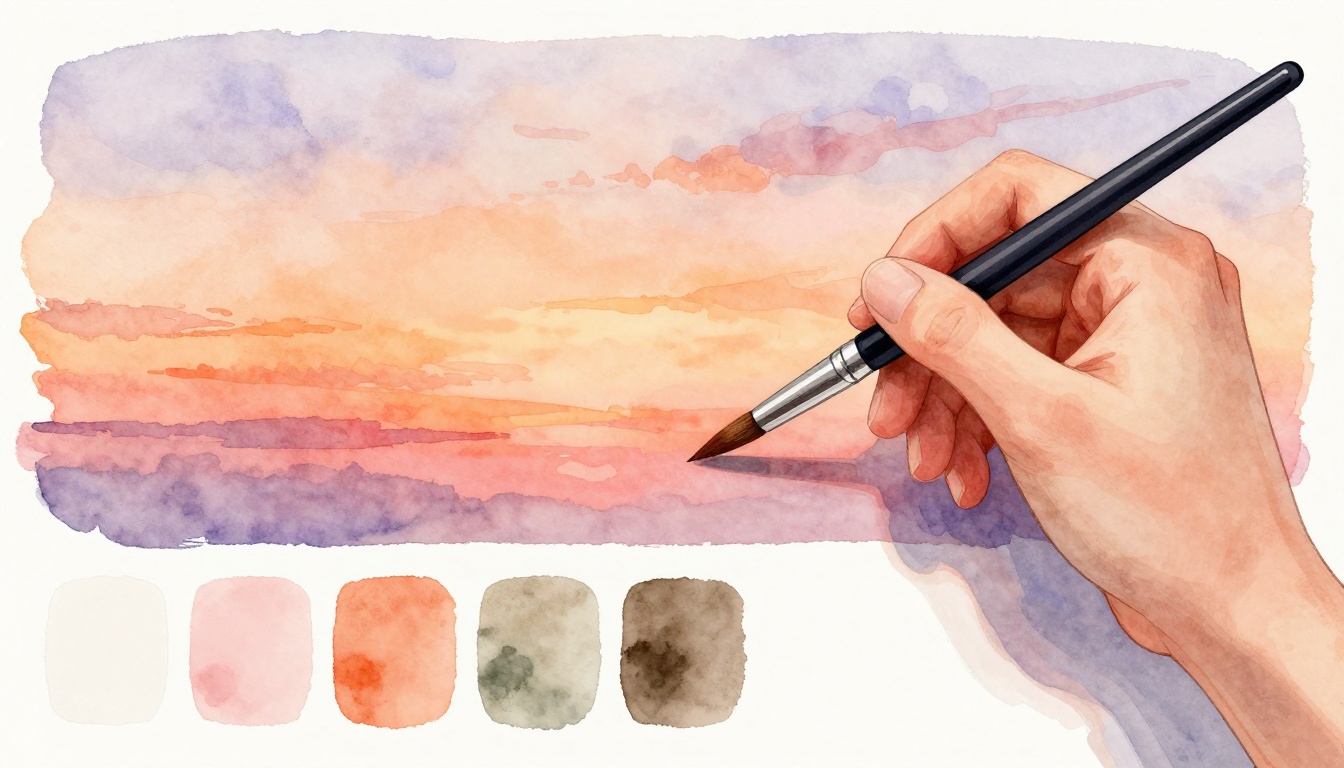
Picture this. You grab your brush for a glowing sunset sky in watercolor. Colors blend at first. Then disaster strikes. Layers mix into a dull brown mess.
Transparent washes create that luminous effect artists chase. You apply thin, see-through paint layers. Light bounces through them for depth and vibrancy. But mud happens fast. Overmixing or wrong timing dulls everything.
You can fix that. This guide shows simple steps, right supplies, and fixes. You’ll layer cleanly for pro results. Deeper colors emerge without the frustration. We start with why mud forms. Then we build from there.
Why Transparent Washes Get Muddy and How to Stop It
Mud ruins washes because layers blend when they shouldn’t. Too much water reactivates dried paint below. Pigments lift and mix into gray sludge. Opaque paints block light right away. Transparent ones let underlayers glow.
Glazing fixes this. You paint light colors over dry layers. Each adds subtle shifts. The key rule stays simple: let every layer dry completely. Air dry works best. Fans speed it up sometimes.
Three main causes lead to mud. First, rewetting happens when you paint too soon. Wait 10 to 30 minutes based on humidity. Second, poor pigments turn chalky. Third, heavy applications pool water. Dilute more next time.
Focus on transparent paints. They stain paper and stay sheer. Opaque ones cover like gouache. Check labels for clues.
Spotting Transparent Pigments on Labels
Paint tubes show transparency ratings. Look for stars or single-pigment codes. Quinacridone rose gets three stars often. Phthalo blue does too. These stay clear when diluted.
Avoid earth tones early. They mud easily. Start with six transparent colors: yellow, red, blue, green, orange, purple. Mix from primaries later.
Staining paints grab paper fibers. They resist lifting. Non-staining ones float off. That causes reworking disasters. Build your palette around stains for clean layers.
The Role of Paper and Brushes in Clean Layers
Paper matters most. Hot-pressed sheets stay smooth for even washes. They hold multiple layers without buckling. Use 140-pound weight minimum.
Cold-pressed adds texture. But it grabs paint harder. Test both.
Brushes control flow. Synthetic rounds in sizes 6 to 12 spread evenly. Squirrel hair holds water well. Clean them between colors. Rinse in clean water. Blot on a towel.
Dirty brushes drag old paint. Fresh ones keep layers pure.
Gather Supplies for Perfect Wash Layering
Start with quality tools. Cheap paints have fillers. They turn opaque fast. Artist-grade transparent watercolors shine instead.
Pick Daniel Smith or Winsor & Newton tubes. They list transparency clearly. Get 140-pound hot-pressed paper in a block. It stays flat.
Round brushes sizes 6, 10, and 12 handle most washes. A palette with deep wells mixes clean. Use distilled water. Tap water minerals stain.
Prep matters. Soak paper five minutes. Tape it down. Mix master washes at 1:20 paint-to-water ratio.
Here’s a quick supply checklist:
| Item | Why It Helps | Recommendation |
|---|---|---|
| Transparent paints | Stay sheer for glow | Daniel Smith essentials |
| Hot-pressed paper | Smooth, no buckling | Arches 140lb block |
| Round brushes | Even flow, control | Sizes 6-12 synthetic |
| Palette | Separate color mixing | Stay-wet plastic |
| Distilled water | No mineral mud | Bottled |
| Tissues | Blot excess | Soft, absorbent |
This setup costs under $100. It lasts years. Test everything on scraps first.
Layer Your Washes Step by Step for Glowing Results
Patience builds glow. Layer light to dark. Dry fully between each. Practice on scrap paper. Aim for three to five layers max.
Start with a sky-to-sea demo. Tilt your board 15 degrees. Work top to bottom.
Mix and Test Your First Diluted Wash
Drop paint into a water puddle. Stir for pale yellow ochre. It should read as tinted water.
Test on scrap. Tilt to see even flow. Adjust if too strong. Transparency shows when you hold it to light.
Apply Light Base Layer and Let It Dry Fully
Load brush lightly. Stroke top to bottom. Keep edges soft. Avoid puddles.
Finger test dryness after 15 minutes. It feels cool and firm. Natural air dries best. No heat warps paper.
Glaze the Second Layer Precisely
Mix mid-tone blue now. Less water for control. Paint over dry base. Soften edges with a clean damp brush.
Skip wet spots. They lift color below. Watch glow emerge.
Build Multiple Layers Without Overworking
Add cerulean next. Focus on shadows. Step back often. Check values from afar.
Three layers deepen sky. Four build sea foam. Stop when right. Overworking dulls.
Finish with Highlights and Details
Reserve whites early. Lift mud with tissue if needed. Add fine details dry. Fixative protects optional.
Your painting glows now. Light shines through.
Dodge Muddy Disasters with These Smart Fixes
Mistakes happen. Rewetting tops the list. You paint too soon. Colors lift and blend. Wait longer next time.
Dirty water clouds everything. Change it every five minutes. Blot brush often.
Heavy hands pool paint. Use more water. Tilt board helps.
Prevention beats fixes. Practice swatches daily. Track humidity effects.
Quick Rescue for Accidental Mud
Damp mud lifts with tissue. Press gently. Rinse area lightly. Redo the wash.
Sponges absorb deeper errors. Blot fast. Dry fully before next try.
Sometimes start over. Small areas save most pieces.
Daily Habits for Always-Clean Washes
Clean your space each session. Label color swatches. Note dry times.
Join online groups. Share challenges. See others’ fixes.
Negative painting works advanced. Layer around shapes. It keeps edges crisp.
Experiment freely. Mud teaches most.
Layering transparent washes takes practice. Pick transparent paints. Dry fully each time. Dilute well. Go light to dark.
You’ll paint luminous scenes soon. Try a simple landscape today. Share your results in comments below.
Watercolor magic comes from light. Let layers reveal it. Your next painting waits. Grab that brush.